
Real-Time Intelligence
Operational events become live KPIs and alerts, with a path from each event to an action.
Vision and scoring models built on your experts’ categories, and measured before they reach live work.
Your experts’ standard
Classes defined from how your team already decides.
Measured before live use
Evaluated on held-out examples your team can inspect.
Wired into the work
Output feeds a defined inspection, review or analytics step.
Scoped in the first working session · Fixed price · The evaluation report is yours
An inspector can spot a defect that a label describes poorly. A model can score confidently and still miss the distinction that changes the decision.
Define the classes first
The expert’s categories become the model’s task.
Measure against the decision
Results reported in the classes the business needs.
Keep measuring live
Incoming data can change after the first evaluation.
Four stages take one inspection or scoring task from the expert’s standard to a measured model in use.
Work from the categories and examples your experts use. Agree what the model must tell apart.
You receive
Class definitions
The categories the model must distinguish, with examples, agreed with your experts.
This service builds and measures one model; agents and live event streams sit with the neighbouring services.
Need an agent that acts in your systems?
That is Agentic AINeed to act on live event streams?
That is Real-Time Intelligence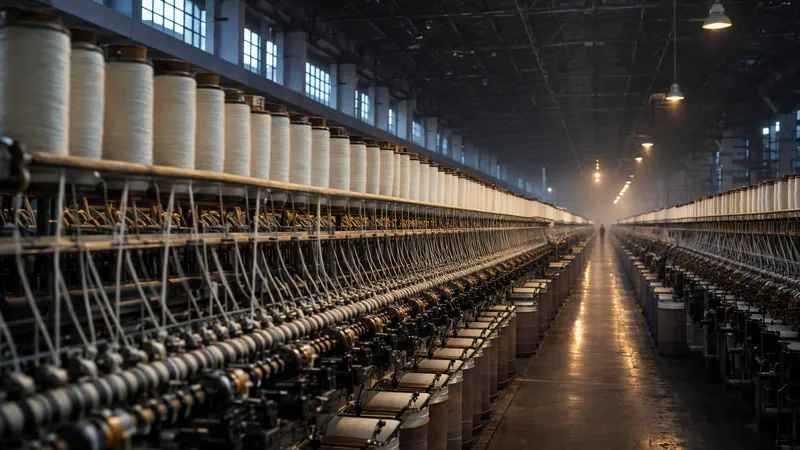

Grasim Industries · Aditya Birla Group
Manufacturing · Textile
Grasim’s technicians checked fibre quality by reviewing images by hand, batch by batch. We built a computer-vision pipeline that classifies about 10,000 fibre images a day against the defect types the QC team defined. Inspection fell from 4 hours to 1 minute per batch at 98% defect-detection accuracy, and material and inventory cost fell 40%.
It takes one inspection or scoring task from your experts’ standard to a measured model in live use. We define with your experts the classes the model must tell apart, prepare the images or records for training and testing, evaluate the model on held-out examples, and connect its output to an inspection, review or analytics step, where it keeps being measured on production data.
We measure it on held-out examples against the classes your experts agreed, and report the result per class in terms they recognize. A model can score an image confidently and still miss the distinction that changes the production decision, so its confidence is not the test. Measurement continues after deployment, because the volume and character of incoming data can change.
You need examples of the task as your experts already decide it: images, camera feeds or structured records, and the categories they sort them into. The categories matter as much as the examples, because they become the model’s task. Data quality is assessed at the start, alongside the operating decision the model will serve and the path its output will take.
The duration is scoped in the first working session, because it depends on the model, the data and how the output will be served, and the price is fixed once it is scoped. You keep the model design, the class definitions agreed with your experts and the evaluation report with measured results per class.
Natural next step
When the model output needs an immediate response, connect it to the live operating path.
Operational events become live KPIs and alerts, with a path from each event to an action.
Incoming data is checked at the boundary and lands as reusable feeds in a governed lakehouse.
Governed semantic models on Power BI or Looker, with metric definitions your team can inspect.
Bounded agents that pass an evaluation gate before release, with scoped tool permissions and an agreed operating plan.
Identity, policy, safety and traceability sit in the request path, so every action leaves an auditable trail.
Book a 30-minute working session on one task, its data and how the model will be measured.